This post is a collection of images authored by Ukiyo-e masters related to the Torii school in Japan in the 17-20th century.The Ukiyo-e (woodprint block art) has a long history. In this post we introduce the Torii school which lead the development of Ukiyo-e in 17th century Japan and continues to have great influence in Japanese art even now.
This site attempts to make apparent the beauty hidden in images in Japanese Ukiyo-e thru the site’s image scrolling function.
Choose an image and click. It will expand and scroll view. You can click control tabs on the upper left corner of the screen. Depending on the tab, you can (1)fast scroll (skip button), (2)expand, (3)minimize, (4)shift right or left, (5)pause or (6)scroll up or down. You will see details not noticed in normal viewing. This will reveal beauty hidden from you before.
Some comments by the administrator of this site have been added. we believe a painting is more enjoyable when a person unders tands some of the history and circumstances behind each painting. Enjoy !
The 1st & 2nd head of the Torii School. From Japanese Kabuki to Ukiyo-e art
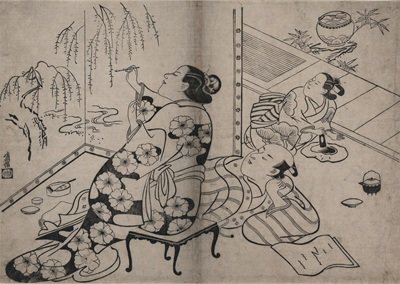
The first image is an Ukiyo-e is by Torii Kiyonobu, “The courtisan painting a screen”. A woman paints a screen while a reclining man watches and a woman in the background mixes ink.
Torii Kiyonobu and his father Torii Shōshichi are considered the founders of the Torii school. Torii Shōshichi was an actor from the Osaka district in Japan who moved to Edo (present day Tokyo) in 1687. Shōshichi was unsuccessful as an actor probably because of the cultural difference between Osaka and Edo. So he turned to painting advertisements and billboards for Japanese theater called the kabuki. His son Torii Kiyonobu soon eclipsed him and the pair established a school of painting which influenced the establishment of the Ukio-e style of art. The Torii school is active even today.
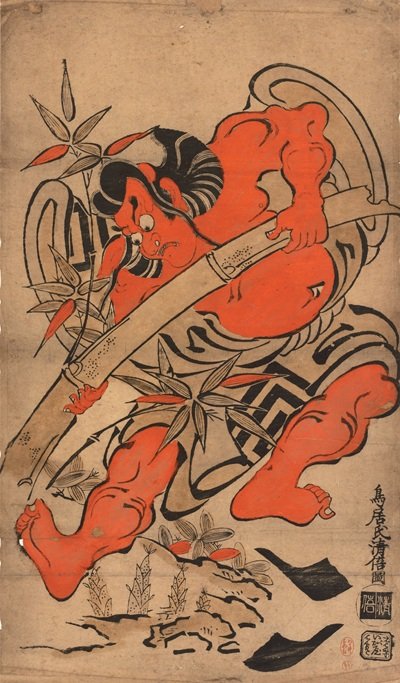
The second Ukiyo-e is one of the most famous from the early Torii school. It was authored by Torii Kiyomasu (1690-) and the subject is kabuki actor Ichikawa Danjūrō I (1660–1704) in his role as Takenuki Goro.
This shows that the Torii school focused on billboards and advertisements for the kabuki theater.
The subject of this Ukiyo-e is Ichikawa Danjūrō I (1660–1704). He was a kabuki actor in Japan. He remains one of the most famous of all kabuki actors even today and is considered one of the most influential. He pioneered the aragoto style of acting which came to be associated with Edo kabuki and was the first Danjūrō in the Ichikawa Danjūrō line.
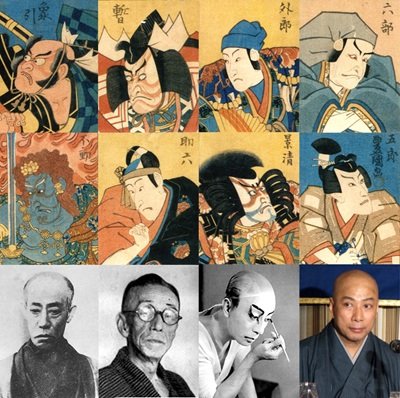
The third image is a list of 13 kabuki actors who took the Ichikawa Danjūrō name stating with Ichikawa Danjūrō I in the 17th century to the 12th Danjūrō in the 21th century. The present Ichikawa Danjūrō, the 13th in line is not shown here, but he is alive and appears frequently in Japanese TVs as well as the kabuki theater.
Against this rich background the Torii family has been creating Ukiyo-e art first as billboards and advertisement for the Japanese kabuki theater, then as independent works of art.
At first many Ukiyo-e images depicted actors and the kabuki world, but Kiyonobu and his successor Torii Kiyonobu II, also created paintings and prints of courtesans, erotic scenes, and sumo (Japanese style wrestling).
Other schools and styles emerged over the course of the 18th century, but the Torii style remained at the core of Ukiyo-e.
Torii Kiyomitsu (3rd head of the Torii school)
The 3rd head of the Torii school was Torii Kiyomitsu (1735–1785). A lot of his art concentrated on advertisements and billboards for the Japanese kabuki theater, but he also produced some independent art. Kiyomitsu is not considered one of the greats but he created some delicate and exquisite Ukiyo-e images. He is also the teacher of Kiyonaga Torii, the great Ukiyo-e master.
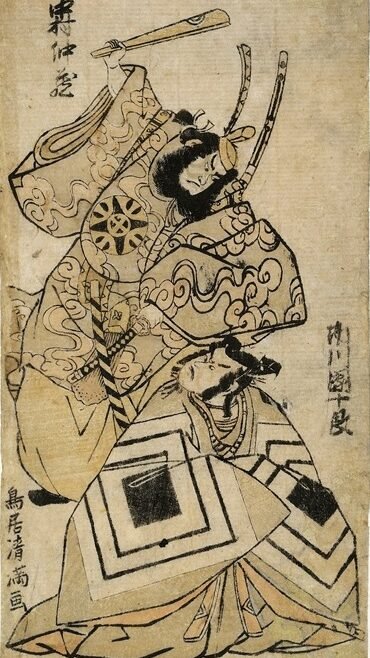
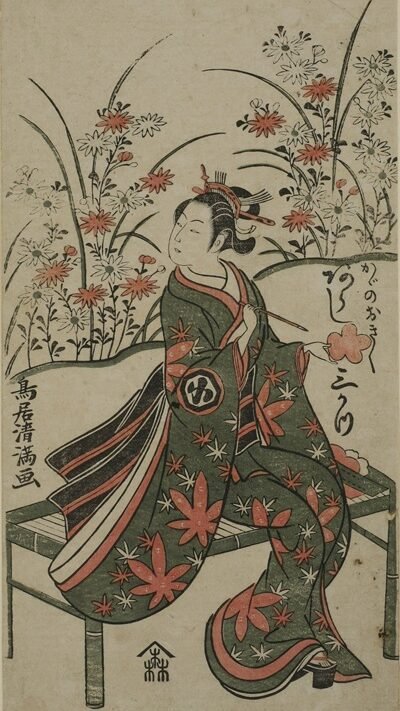
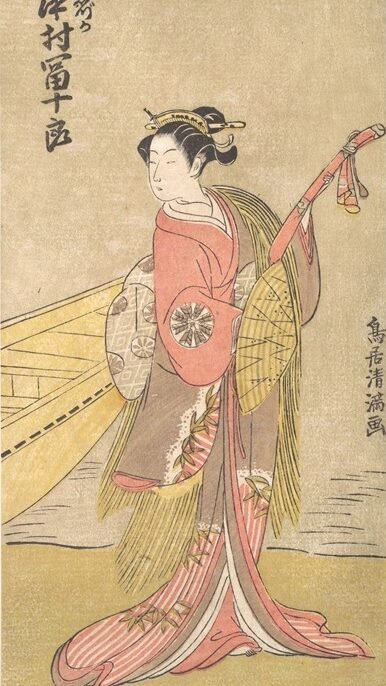
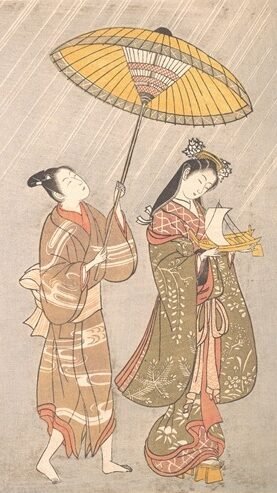
- Nakamura Nakazō I and Ichikawa Danjūrō IV (circa 1760) by Torii Kiyomitsu (1735–1785)
- Kabuki actor Arashi Sankatsu I as Kaga no Okiku (1763( by Torii-Kiyomitsu
- Nakamura Tomijūrō I in the Role of Koshizuka (circa 1767) by Torii Kiyomitsu (1735–1785)
- Amagoi Komachi — beauty praying for rain (circa 1765) by Torii Kiyomitsu (1735–1785)


The great Torii Kiyonaga (4rd head of the Torii school)
Torii Kiyonaga is considered one of the great Ukiyo-e masters together with Kitagawa Utamaro, Toshusai Sharaku, Katsushika Hokusai, and Utagawa Hiroshige.
Torii Kiyonaga is famous for his bijin-ga (portraits of women) shifting focus from isolated courtesans to elegant, modern women from all social classes. He often depicted them interacting naturally in public spheres—such as promenading along the Sumida River or stepping out from a bath house.
As Kiyonaga was head of the Torii school, he had to bring in the money so inheriting his school’s legacy of theater advertising, Kiyonaga designed numerous prints of actors. Unlike earlier idealized versions, his theatrical style paid meticulous attention to real stage compositions, depicting the true musicians, dancers, and unvarnished realities of the performance.
His artistic style represents the pinnacle of late 18th-century Japanese ukiyo-e woodblock printing.
Twelve Months in the South (Minami Juni-ko)
The following “Twelve Months in the South (Minami Juni-ko)” is a celebrated Ukiyo-e series by Kiyonaga.
The “South” in the title refers to Shinagwa, a bustling coastal post town located south of the Edo capital (modern-day Tokyo). It was famous for its vibrant pleasure quarters and brothels. Today, Shinagawa is still a major district in Tokyo but the seashore has receeded because of land reclamation. The series consists of twelve scenes, each dedicated to one month of the calendar year, showing how the courtesans, geishas, and their patrons spent their time in different seasons.
Kiyonaga broke new ground by designing many of these Ukiyo-e as multi-sheet compositions. Diptychs (two sheets side-by-side) would depict relayed content. Using duptychs he created sprawling, panoramic views of Shinagawa.
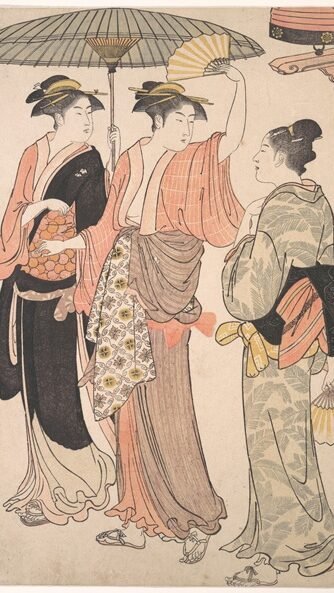
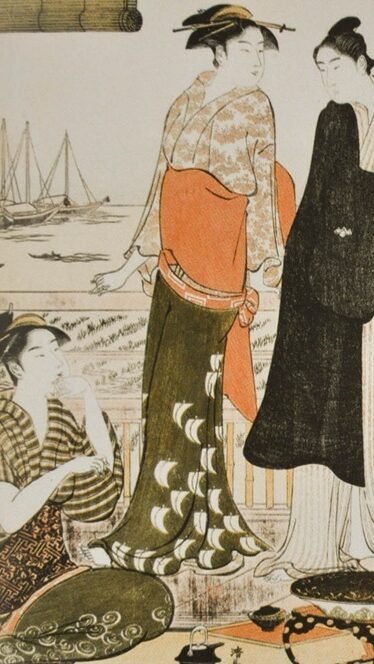
- Fifth month of the series Minami jūni kō (1784) Diptych left side. Click here for more info.
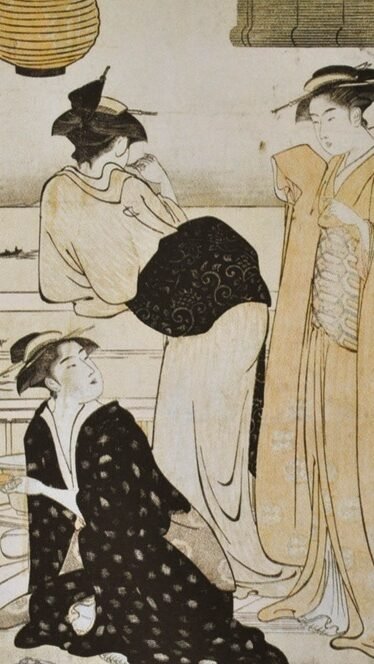
- Sixth month of the series Minami jūni kō Diptych left side (Enjoying the Cool in a Teahouse) (1784). Click here for more info.
- Sixth month of the series Minami jūni kō. Diptych right side (Enjoying the Cool in a Teahouse)(1784). Click here for more info.
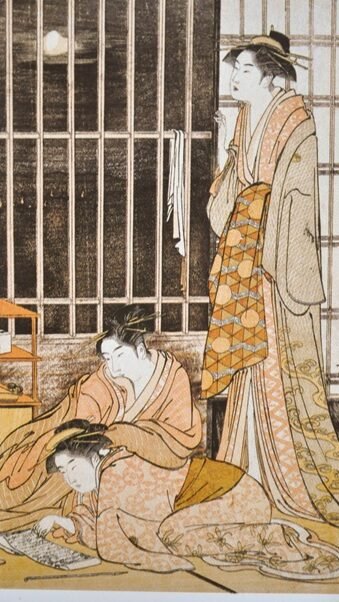
- Ninth month of the series Minami jûni kô (Prostitutes in a brothel in Tokyo) (1784). Click here for more info.
More Info
Click here for source and license information
This ukiyo-e portrays the transition from spring to early summer. Courtesans, geishas, and their attendants are relaxing in the cool of early summer. Kiyonaga’s bijin-ga (pictures of beautiful women) portray tall, statuesque figures with realistic proportions. This showcases Kiyonaga’s break from tradition. He shifted from the small fragile women figures of tradition to tall, statuesque woman figures.
More Info
Click here for source and license information

This is the left side of a Diptych (two sheets side-by-side with related content). The women are relaxing and seeking relief from the summer heat. They are clustered near an open window overlooking the bay. Kiyonaga cleverly uses the extra space in the diptych to present a panoromic view of the bay of Shinagawa.
More Info
Click here for source and license information.
Same comment as previous ukiyo-e. The ditptych combine to create a panoramic view.
More Info
Click here for source and license information.
.JPG)
This ukiyo-e shows prostitutes relaxing in a brothel parlor as evening falls. Through a barred window, you see a crescent moon and tiny dots of light floating on the bay. The lights were used by fishermen to attract fish at night. The scene evokes a sense of autumn nostalgia.
Others
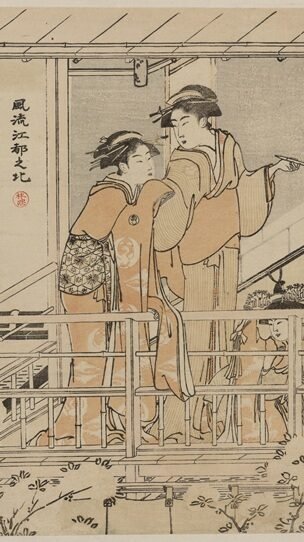
More Info
Click here for source and license information.

This Ukiyo-e is a close look at the pleasure districts of Yoshiwara in the hanami (cherry blossom viewing) season. The Japanese like to watch the blooms and party. Here two courtesans paired with a young attendant (kamuro) is admiring brilliant cherry blosoms from their quarters.
More Info
Click here for source and license information.

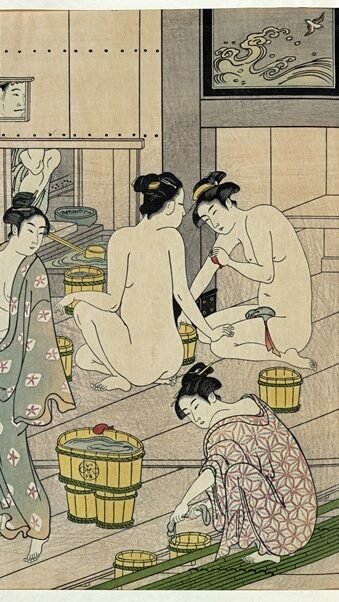
This is the left side of a diptych (two sheets with related content that complement each other). It shows women in casual stages of undress. Erotic Ukiyo-e existed before but they were “Shunga”, made for private viewing only. Here we have an Ukiyo-e intended for public commercial use. This was a breakthrough.
Kiyonaga uses his hallmark style and depicts the women as tall, slender, graceful figures with statuesque nobility. Their existance in an ordinary bathroom transforms the Ukiyo-e into a work of art. The left side features the natural interactions, relaxed postures, and casual conversations among the women away from the strict social gazes of Edo society.
More Info
Click here for source and license information.
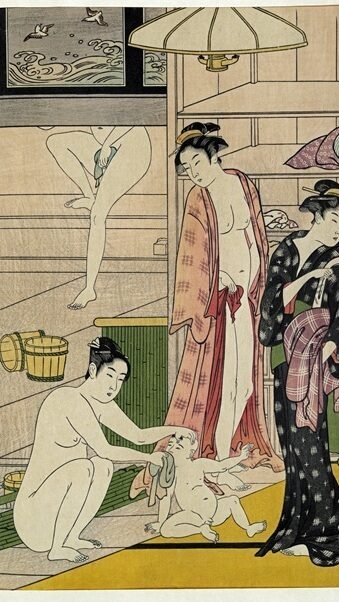
This is the right side of the diptych and shows women in various stages of undress. One woman tends to a toddler, others move wrapped in loose cotton robes preparing to bathe. A domestic scene.
More Info
Click here for source and license information.

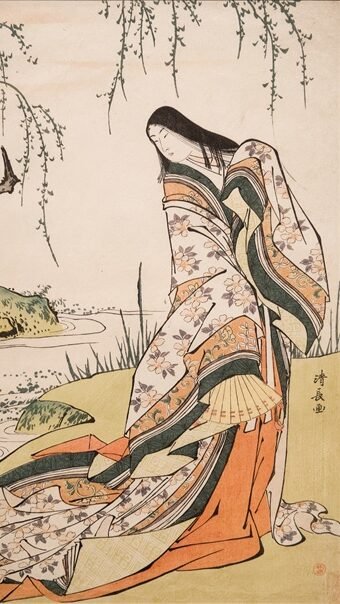
The subject is Ono no Komachi, a famous beauty from 9th century Japan. She was the Cleopatra of Japan. A poet of the first rank; beautiful, intelligent. She was a favorite subject with the artists of the Edo period. Kiyonaga created multiple renditions. In this one, Ono no Komachis is a woman in a flowing robe beneath a willow tree. The backdrop echoes Chinese brush paintings and the lovely poetry of 9th century Japan.
- Hanami (1785). Click here for more info.
- Onna yu (Bathhouse women) Diptych left side (after 1788). Click here for more info.
- Onna yu (Bathhouse women) Diptych right side (after 1788). Click here for more info.
- The poetess Ono no Komachi. Japan, Edo period (1784). Click here for more info.
More Info
Click here for source and license information.

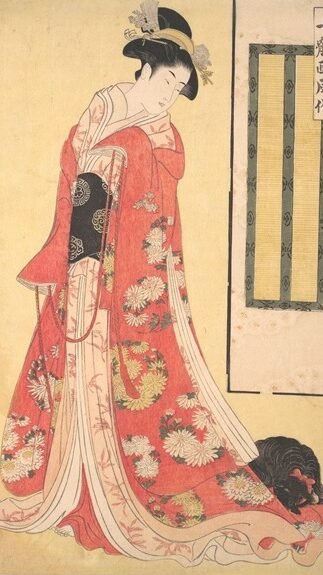
This is a celebrated Ukiyo-e in the series Jittaiga Fuzoku (Pictures of Ten Styles). The woman is tall, stately, elegant. A typical woman in the Kiyonaga style. Her sophisticated hairstyle, flawless expression, and luxurious outfit signify high social standing. At her feet is a Japanese spaniel. These dogs were highly prized, rare, and exclusively bred as companion animals for nobility. This emphasized her elite, private domestic environment.
More Info
Click here for source and license information.

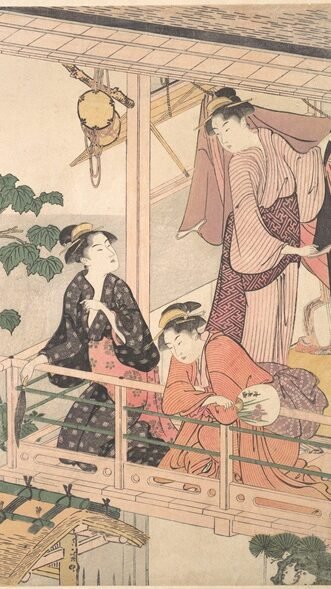
This Ukiyo-e is celebrated for its bijinga (pictures of beautiful women) and served as the upper sheet of a vertical diptich. The women are in typical Kiyonaga style, tall, graceful, elegant. Enjoy!
More Info
Click here for source and license information.

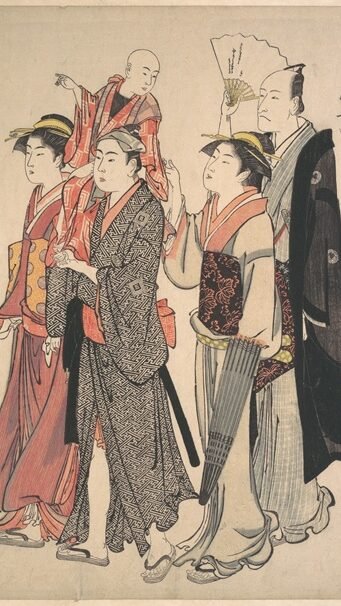
Kiyonga’s work for the theater in Edo. Kabuki actor superstar Danjūrō V and his family on an outing to a shrine. Danjūrō’s son Ebizo, the future Danjūrō VI, is carried on the shoulder of Ichikawa Masugoro, Danjūrō’s disciples. The Danjūrō family crest of three nested squares (mimasu) is scattered over the son’s kimono. This trademark of the Ichikawa line is recognized even today in the Kabuki theatre.
More Info
Click here for source and license information.
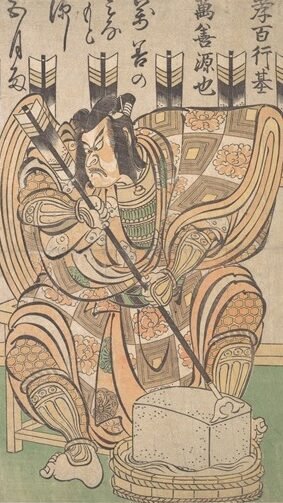
The Torii school dominated the production of ukiyo-e prints of Kabuki actors in the eighteenth century. This ukiyo-e by Kiyonaga shows Soga Gorō preparing to take revenge on his family’s enemy, Kudō Suketsune, by sharpening an oversized arrowhead. The actor is Ichikawa Danjūrō II. The play is famous and is called one of the “Eighteen Best Plays of the Ichikawa clan”.
More Info
Click here for source and license information.
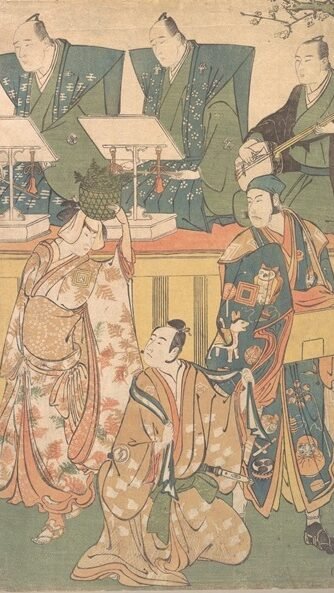
This was a revolutionary ukiyo-e. It depicted kabuki actors performing on stage directly in front of the musicians and chanters. Previous artists focused on frozen dramatic poses of the actors but Kiyonaga captured the entirety of the dance scenes and integrated kabuki actors with the musicians and chanters.
- A Young Woman with a Dog (circa 1790–91). Click here for more info.
- Three Women on a Balcony (circa 1786), Click here for more info.
- Ichikawa Danjūrō V and His Family (1782). Click here for more info.
- Ichikawa Danjūrō II in the Role of Soga Gorō from the Play “Yanone” (1790). Click here for more info.
- Scene from a Drama (1788). Click for more info.
Torii Kiyotada V (8th head of the Torii school 1900-1976)
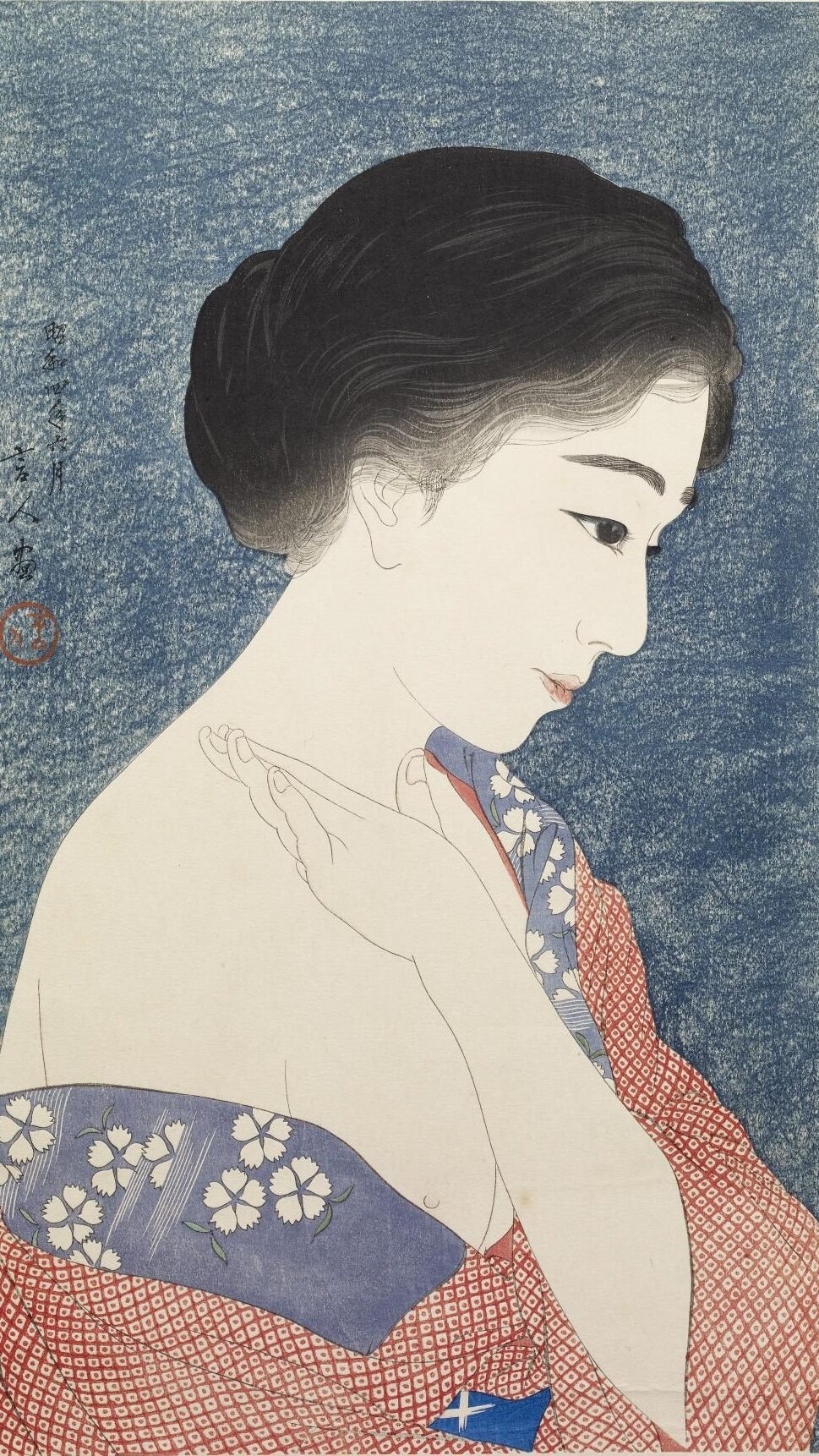
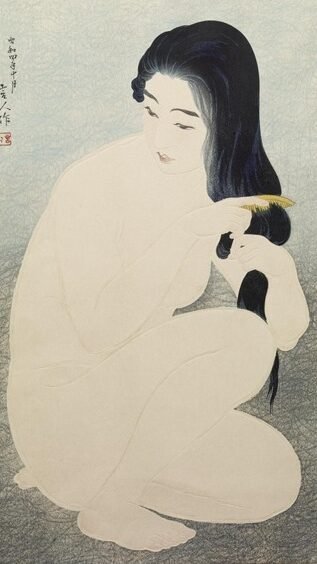
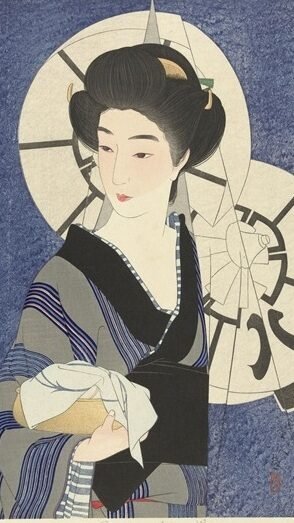
Torii Kotondo (1900–1976), also known as Torii Kiyotada V, was a Japanese artist belonging to the shin-hanga (new prints) movement, He is celebrated for his exquisite bijin-ga (pictures of beautiful women) and traditional kabuki actor portraits.
Brief history
He was adopted by Torii Kiyotada IV, the seventh head of the Torii school of ukiyo-e at age 15. Then in 1929 he became the eighth head of the Torii family, head of a lineage that historically dominated commercial artwork for kabuki theater since the 17th century. Kotondo also lectured at Nihon University in Tokyo from 1966 to 1972.
The ninth head was his daughter, Torii Kiyomitsu. However she died in 2021 and there has been no anouncement of an heir. The 300 years old Torii lineage is at a historic turning point.
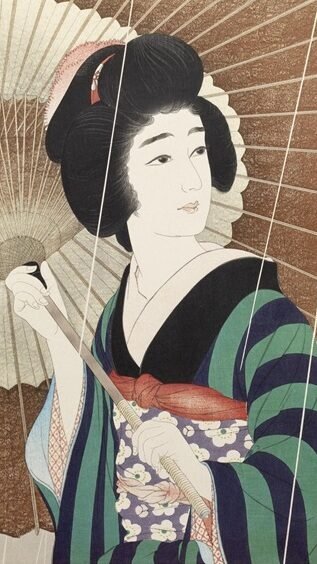
- Rain (1929)
- Make-up (1929)
- Kamisuki (Combing Her Hair) (1929)
- Yugaeri After a visit to the bathhouse (1933)


_-_Walters_95889.jpg)
,_RP-P-1996-124.jpg)
The Kabuki theater Ichimura-za in its early days
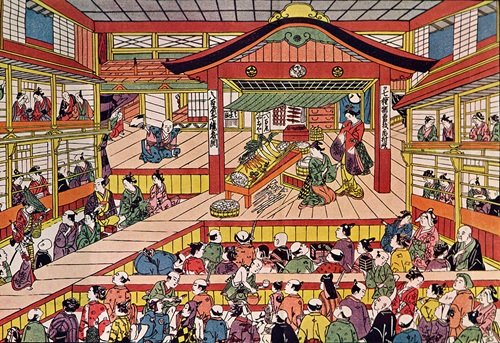
Shibai Ukie (around 1741–44) by Masanobu Okumura (–1764)

The Ichimura-za was a famous kabuki theater in Tokyo (formerly Edo) that opened in 1634 and operated for nearly 300 years. Run by the Ichimura family, it was one of the few official licensed theaters of the Edo period, celebrated for its rich history and unique stage traditions. For example it debuted monumental works like the kabuki adaptation of Battles of Coxinga (1717), It survived multiple fires and financial trials but burnt down permanently in 1932.
Notes
The comments above reflect only the thoughts the administrator had while viewing the images. They might or might not be comments by the artist, subjects or the photographers etc.. Please excuse any inaccuracies. You are welcome to leave comments in the comment space. Otherwise send messages to “kohi@scroll.kohibiz.com”.
Click the underlined titles. This will link you to the original site from which the images were taken including license information. We believe there is no problem with the image license. Most are in the public domain.
Most images are from Wikimedia Commons. If there are any problems please leave a message. Images will be taken down if necessary. Some images have been cropped from the original using the Vertical Scroller application program. This is to ensure the best viewing experience.