This post is a series of images featuring the works of the great Italian painter Francesco Hayez (1791-1882). He was one of the premier artists of Romanticism in mid-19th-century Milan. Enjoy !
This site attempts to illuminate beauty hidden in images thru the site’s image scrolling function. This post in particular is a selection of images of paintings in the 18th or 19th century by Italian painter Francesco Hayes,
Choose an image, It will expand and scroll view. You can click control tabs on the upper left corner of the screen. Depending on the tab, you can (1)fast scroll (skip button), (2)expand, (3)minimize, (4)shift right or left, (5)pause or (6)scroll up or down. You will see details not noticed in normal viewing. This will reveal beauty hidden from you before. Enjoy !
Biography
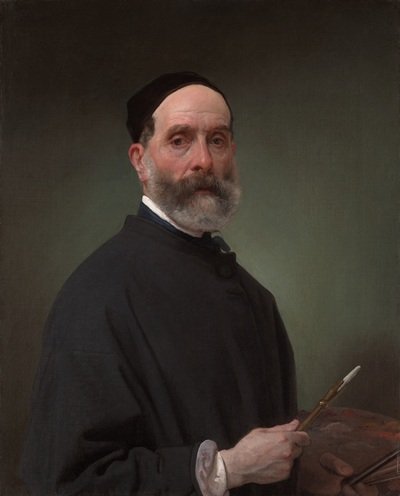
Francisco Hayez (1781–1882) is considered one of the leading painters in the Romantic style in 19th century Milan, Italy. He lived at a time when Italy was fighting for unification that lead to the creation of the Kingdom of Italy. This is reflected in his paintings.
Hayez was born to Frenchman Giovanni in 1781. He showed talent for drawing and trained in Venice under his uncle, Giovanni Binasco. In 1808 he entered the Accademia di Belle Arti di Venezia, won a scholarship and studied at the Accademia di San Luca in Rome. There he met famous artists such as Tommaso Minardi and Jean-Auguste-Dominique Ingres. He also studied both Antique art and the works of Raphael. In 1823 he moved to Milan where he became the center of intellectual and aristocratic life. He was popular and his interests were wide. He painted biblical and fictional themes but was also keenly intertested in Italian history and contempory Italian politics. Thus he incorporated these elements into his paintings. When he grew older his interests shifted to allegorical themes, but these still held political connotations.
Biblical By Hayez
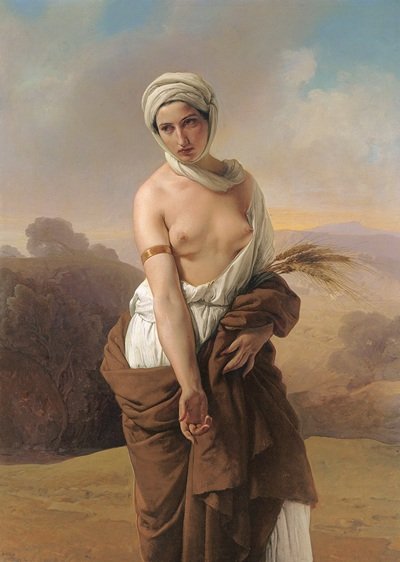
- Ruth (1853): This is from the Book of Ruth, an Old Testament narrative. Ruth, the dutiful daughter of Naomi had refused to leave her mother and was gleaning in the fields of Boaz. Boaz hearing of her loyalty decides to marry her. Later Ruth gives birth to Obed who becomes the father of Jesse, the father of King David.
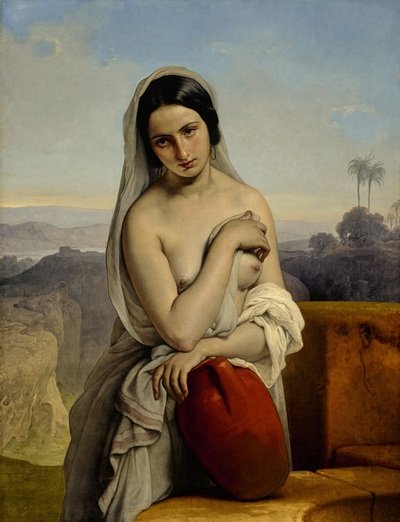
- Rebecca at the Well (1831): This is from an Old Testament narrative (Genesis 24). Rebecca is a lead figure in one of the great family dramas of the bible. Abraham sends his steward Eliezer to find a wife for his son Isaac. Eliezer meets Rebecca at a well. Eliezer begs for water, Rebecca is kind and gives him a drink and also fetches water for his camels. Eliezer struck by her kindness, takes this as a sign from Heaven and bring Issac and Rebecca together. The lesson from this parable is that kindness will always be rewarded.
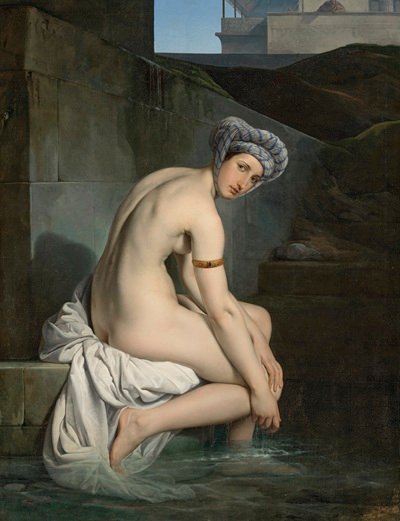
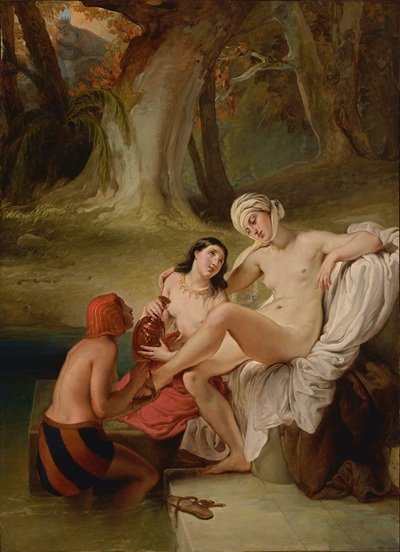
- Bathsheba (1827): Bathsheba, ‘Daughter of Sheba’ was an Israelite queen consort. She was the wife of Uriah the Hittite and later of David, She gave birth to Solomon making her “Gebirah”, the “Queen Mother” in the ancient Kingdom of Judah, She appears in the Book of Samuel where she is summoned by David who lusted for her after seeing her bathing. Davis kills her husband Uriah and marries her.
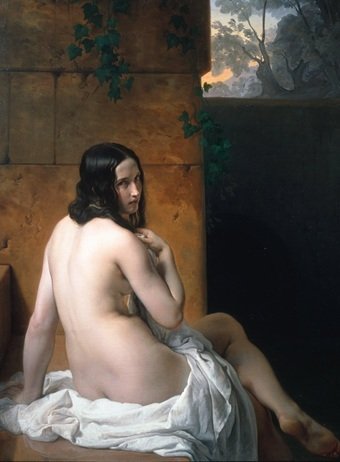
- Susanna at Her Bath (1850): This is a scene from the Book of Daniel. Susanna is an innocent but she is seen bathing alone by some elders who threatens to accuse her of aldultry if she does not sleep with them. She is saved by Daniel. The elders are put to death. This parable is about faith and integrity.

,_by_Francesco_Hayez.png)
,_by_Francesco_Hayez.jpg)
.jpg)
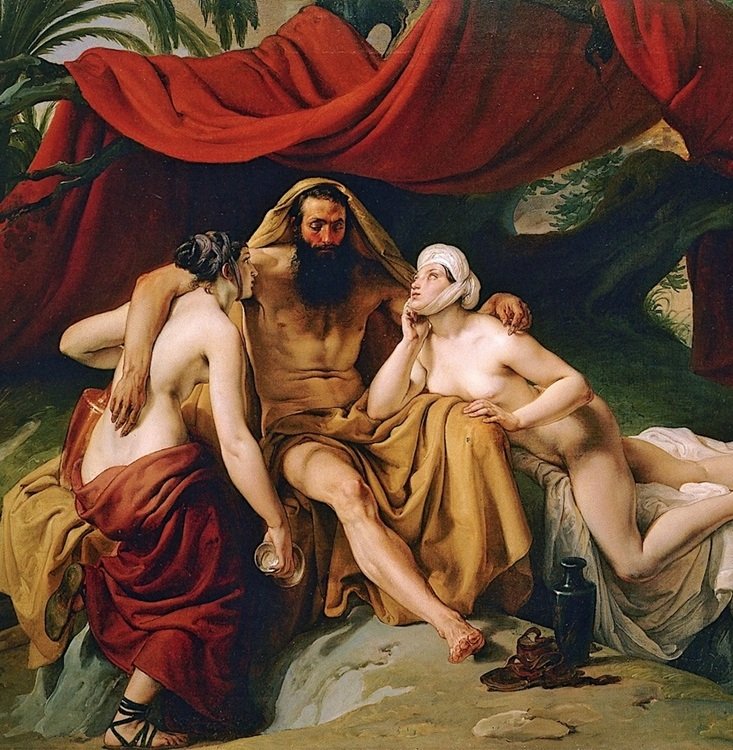
- Lot_con_le_figlie (1833): The story of Lot (Abraham’s nephew) and his daughters from the Book of Genesis. Lot had escaped the destruction of the city of Sodom. His daughters believing they were the only humans left get Lot drunk to conceive children. They succeed and their children’s children become the nations of Moabite and Ammonite.
- Bathsheba Bathing (1834): This depicts Bathsheba bathing according to the Book of Samuel, This is rendered in the Romantic style of the 1830s. This was a popular theme at that time and Hayez painted three versions.
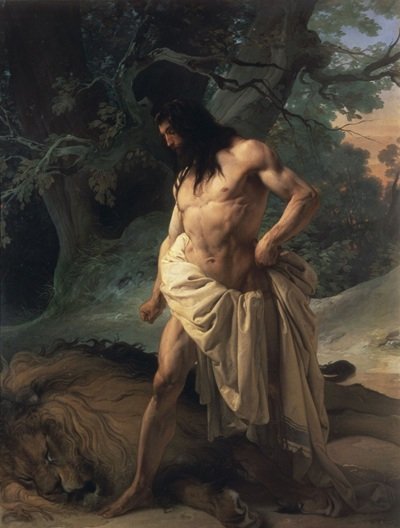
- Samson and the lion (1842): Samson was one of the last of the Judges. Their stories are recounted in the Hebrew Bible,Judges 14. They were leaders of the tribes of Israel. In this story, a young lion attacks Samson. The Spirit of the Lord comes and gives Samson supernatural strength, allowing him to defeat the lion with his bare hands. A superhero story. The theme seems to have been popular in Biblical times (maybe 11th century BCE).
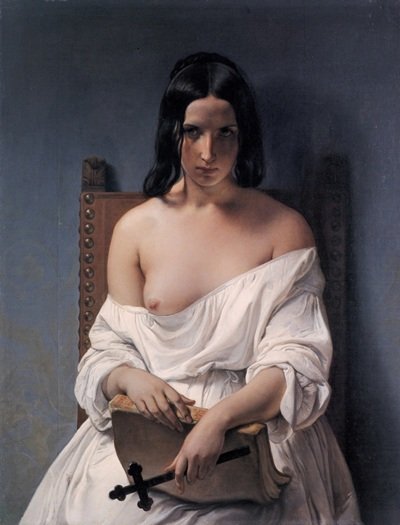
- Meditation on the History of Italy (1850): This is an allegoral painting. A powerful political message is hidden within. The somber woman represents Italy. She holds a cross which signals faith in Christianity and a book titled “History of Italy” which symbolizes Italy’s turbulent past and uncertain future. This highlights the mixture of suffering and hope during 19th century Italy’s struggle for unification.


19th Century Themes
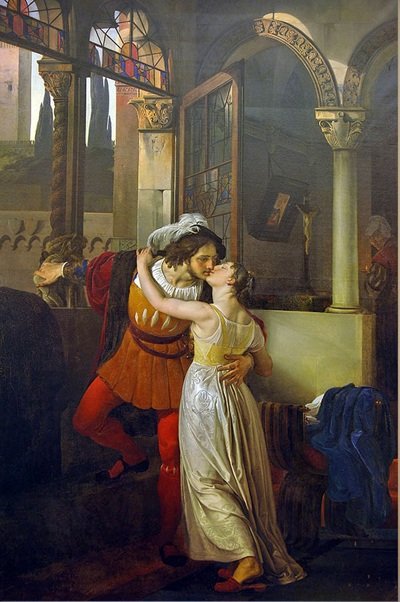
- Romeo and Juliet’s last kiss (1823): The original story is in a famous play by English writer William Shakespearem called “Romeo and Juliet”.
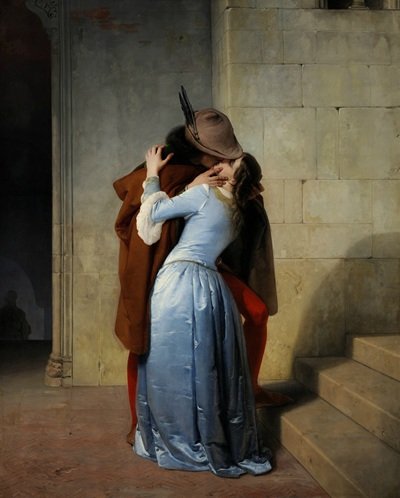
- The Kiss (1859): This is maybe the best known work by Hayez. It is just a kiss, but it is passionate and intense. The woman raises her face to be kissed and the man devours her. This is said to be an allegory. The man is preparing to go. He has a concealed dagger which suggests he will fight for the unification of Italy and rebell against the Habsburg invader. The woman’s blue dress and the man’s red attire implies the French flag and France was aiding Italy in its rebellion. This was painted in 1859. The Kingdom of Italy was proclaimed in 1861.
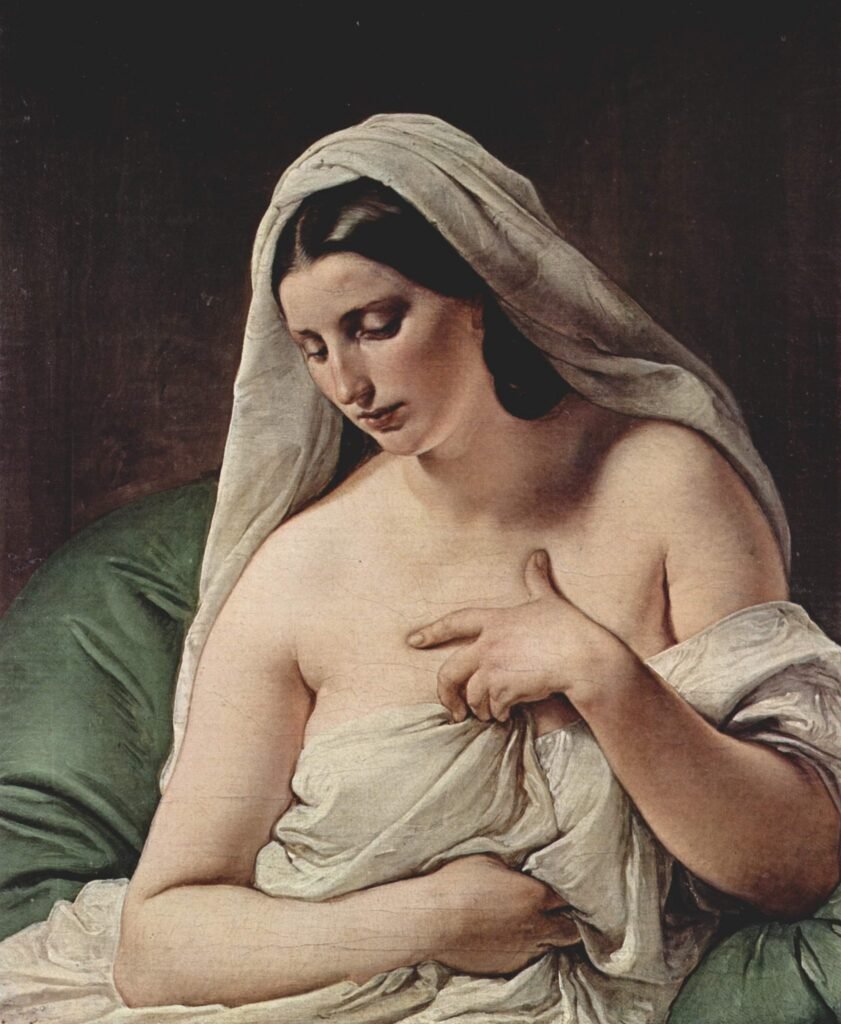
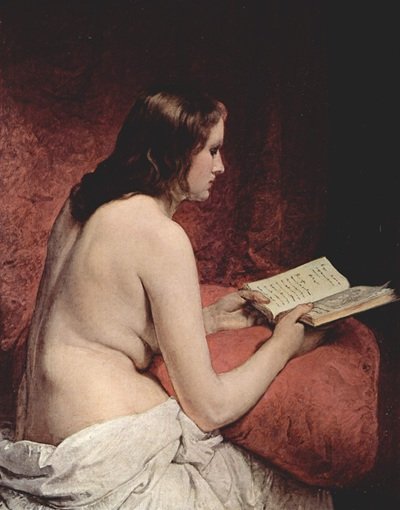
- Odaliske (1867): Picture of a lovely woman. I think Hayez just loved to paint women in the nude, so he named this “Odaliske” to give the painting and himself a studious air. Anyway an odaliske in the 19th century was a woman in a harem, segregated and an object of erotic fancy. Studies of them were popular as a way to introduce the Orient and its culture to the masses.
- Odalisque reading (1866-1867): A masterful presentation by Hayez. The pages of the book depicted like a photo is in sharp contrast to the hazy background and gives the perception of space. The woman’s soft form with shadows evoke the senses. The woman’s gaze is turned to the book and creates a sense of privacy. This is a private view of a confined space.
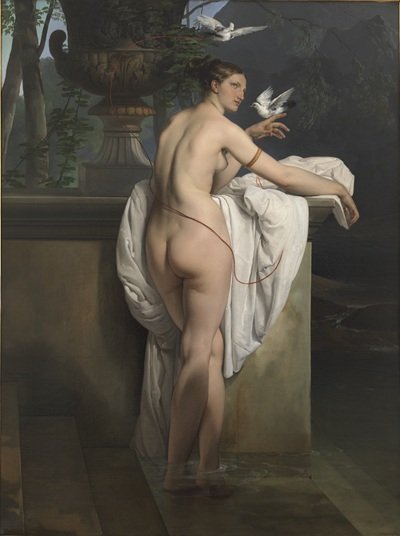
- Portrait of dancer Carlotta Chabert (1830): This is a depiction of the celebrated ballerina Carlotta Chabert posing as the Roman goddess Venus. She has a lovely body.

.jpg)


The Portraits
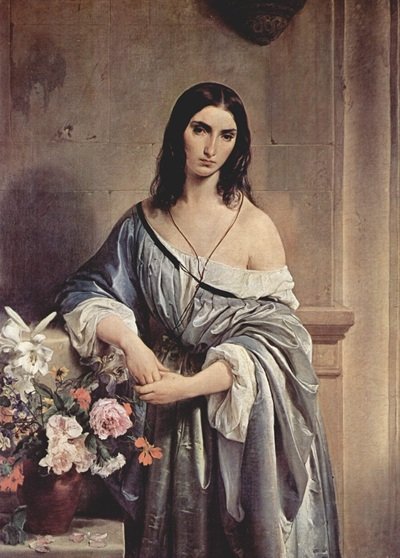
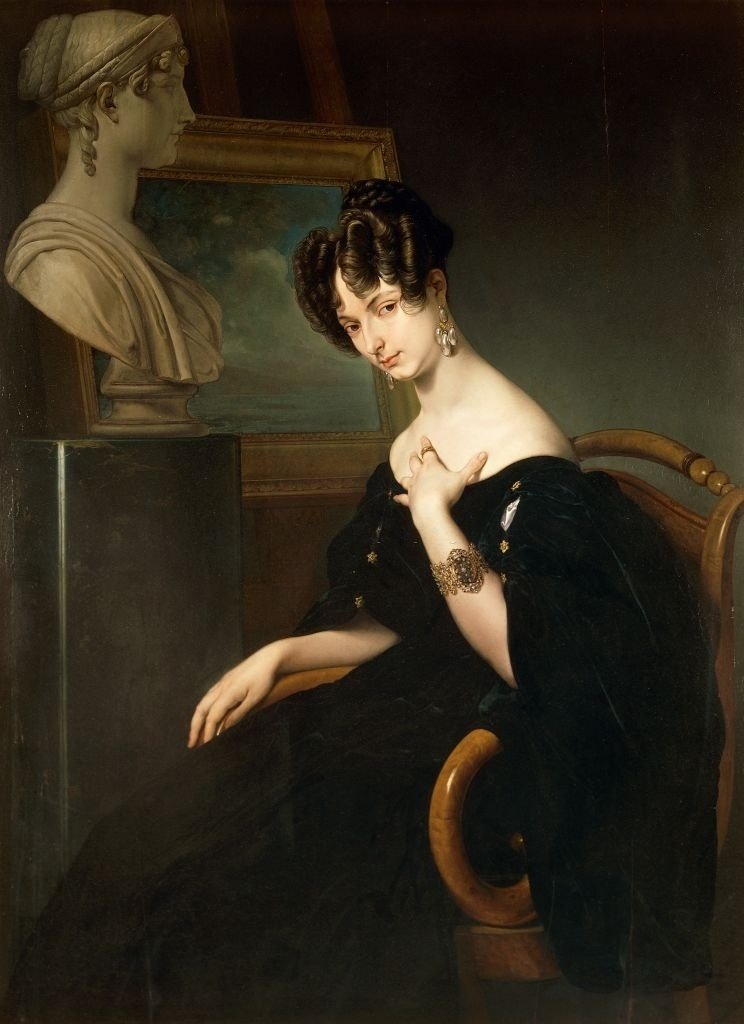
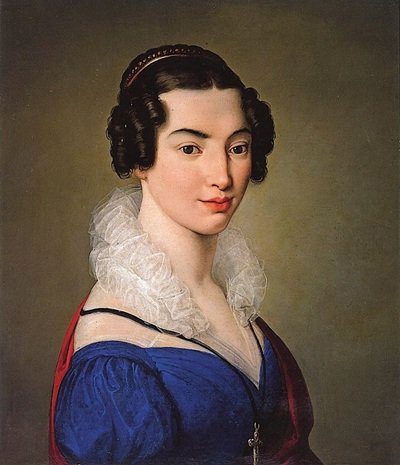
- Melancholic Thoughts (1840-1841): An arresting work. The subject is a young medieval woman, beautiful. She has been abandoned by her lover. She is dejected as evidenced by her clothing falling from one shoulder, exposing portions of her breasts. The flowers on her right wilt.
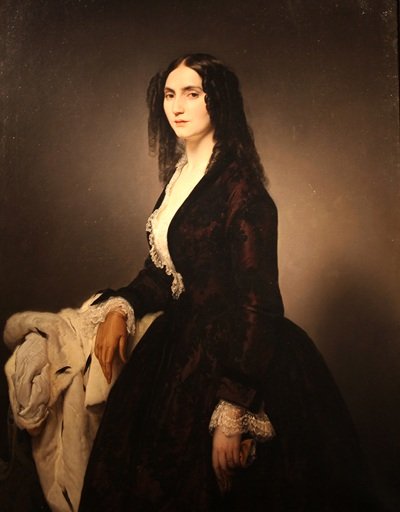
- Portrait of Matilde Juva-Branca (1851): This exemplifies Hayez’ skill in capturing the essence of his subjects. Matilde Branca (Juva by marriage) was an opera singer and also a prominent personality in the salon of her father. In the painting she exudes a sense of dignified composure and inner serenity. Her clothing symbolizes wealth and social status. We get a glimpse of how aristocratic life looked in 1850s Milan.
- Portrait of Cristina Trivulzio Belgiojoso (1832): This depicts the Italian writer, noblewoman and princess of Belgiojoso, Cristina Trivulzio Belgiojoso. She was a prominent campaigner for the Unification of Italy and supporter of the unsuccessful 1848 Revolution.
- Porträt der Antonietta Vitali Sola (1823): This is a portrait of Antonietta Vitali Sola.
_Ritratto_di_Matilde_Juva_Branca_(1851)_Galleria_d%27Arte_Moderna_di_Milano.jpg)


The Revenge Triptych
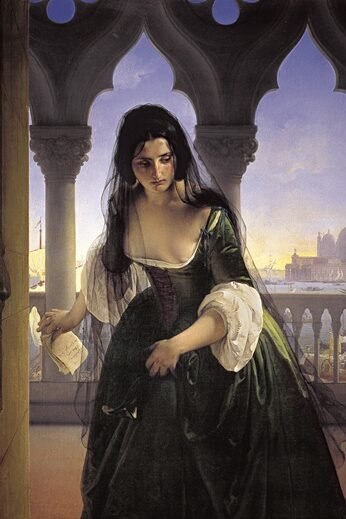
The Revenge Triptych is a set of three 19th century paintings. It is about a woman named Maria and her revenge upon a lover who betrayed her.
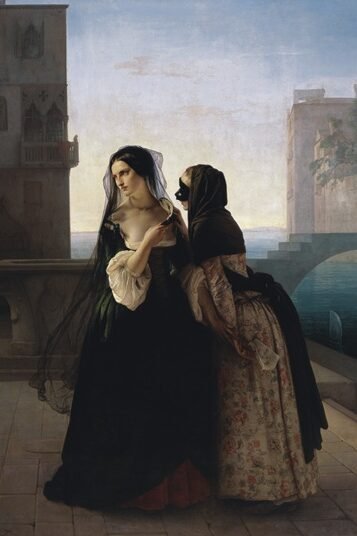
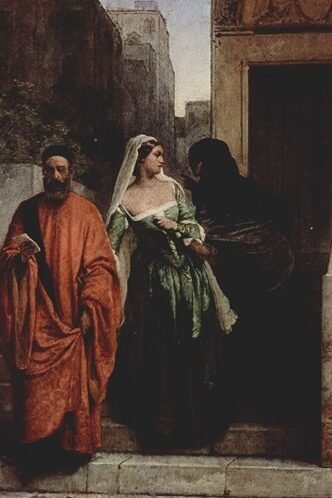
- Vengeance is Sworn (1851): This is the first episode and shows Maria being pursuaded into revenge by her friend Rachel. Rachel holds a letter explaining how Maria’s lover betrayed her and asks Maria to denounce him.
- Accusa segreta (1847-1848): The second episode. It shows Maria looking folorn as she sends a complaint letter to the authorities.
- Revenge of a rival (1853): The third episode is lost. What is shown here is a bad copy. It shows the letter in the hands of an inquisitor. Maria is repenting her action.

.jpg)

Notes
The comments above reflect only the thoughts the administrator had while viewing the images. They might or might not be comments by the artist, subjects or the photographers etc.. Please excuse any inaccuracies. You are welcome to leave comments in the comment space. Otherwise send messages to “kohi@scroll.kohibiz.com”.
Click the underlined titles. This will link you to the original site from which the images were taken. We believe there is no problem with the image license. Most are in the public domain.
The images are from Wikimedia Commons. If there are any problems please leave a message. Images will be taken down if necessary. Some images have been cropped from the original using the Vertical Scroller application program. This is to ensure the best viewing experience.